
23 May
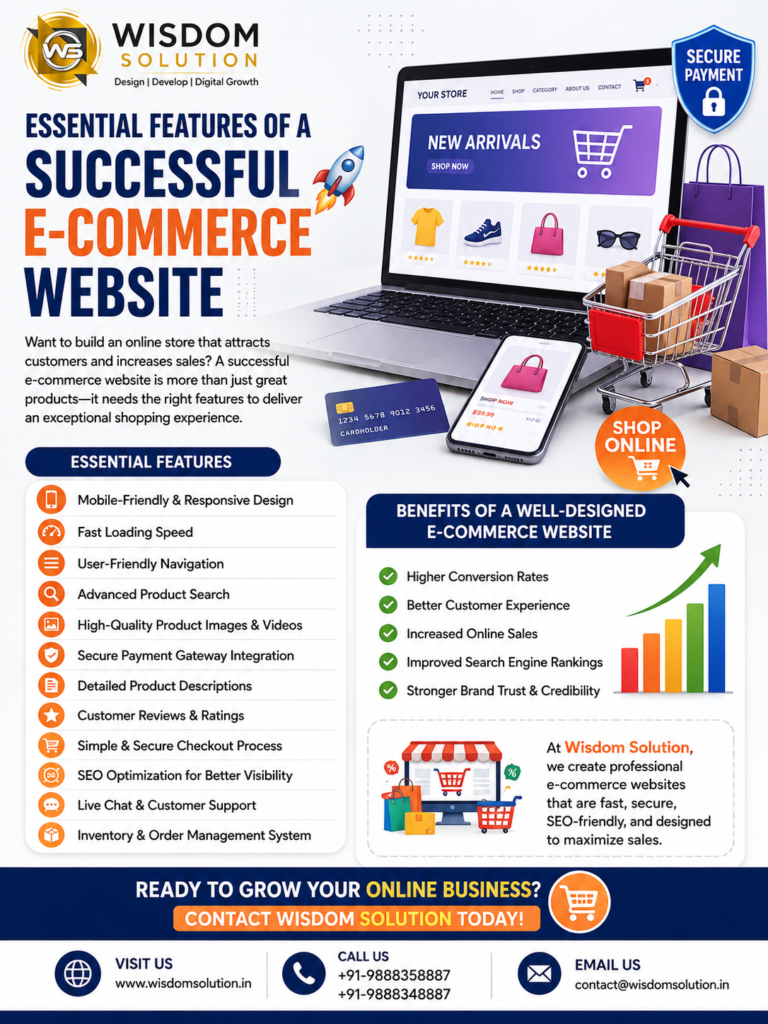
The e-commerce industry continues to grow rapidly as more consumers prefer online shopping for convenience and variety. However, simply launching an online store is not enough to achieve success. Businesses must create a platform that delivers an excellent shopping experience, builds customer trust, and encourages repeat purchases. Understanding the Essential Features of a Successful E-Commerce Website can help businesses improve conversions, increase sales, and stay competitive in the digital marketplace.
Whether you are launching a new online store or upgrading an existing one, implementing the right features can significantly impact your business growth and customer satisfaction.
Why E-Commerce Website Features Matter
A well-designed e-commerce website not only attracts visitors but also guides them smoothly through the buying journey. Customers expect websites to be fast, secure, mobile-friendly, and easy to navigate. When these expectations are met, businesses experience:
- Higher conversion rates
- Improved customer satisfaction
- Increased brand credibility
- Better search engine rankings
- More repeat customers
Investing in the Essential Features of a Successful E-Commerce Website ensures that your online store meets customer expectations and drives long-term business success.
1. Mobile-Friendly and Responsive Design
More than half of online shopping traffic comes from mobile devices. A responsive website automatically adjusts to different screen sizes, providing a seamless browsing experience across smartphones, tablets, and desktops.
Benefits include:
- Improved user experience
- Higher engagement rates
- Better Google rankings
- Increased mobile conversions
A mobile-first approach is no longer optional—it is essential for e-commerce success.
2. Fast Website Loading Speed
Website speed directly affects user experience and sales. Customers expect pages to load within a few seconds. Slow-loading websites often experience higher bounce rates and abandoned shopping carts.
Ways to improve speed:
- Optimize images
- Use content delivery networks (CDNs)
- Enable caching
- Minify CSS and JavaScript files
- Choose reliable hosting services
Fast websites improve customer satisfaction and search engine performance.
3. User-Friendly Navigation
Customers should easily find products without frustration. Clear navigation menus and logical product categories make shopping simple and enjoyable.
Best practices:
- Simple menu structure
- Product filters
- Search functionality
- Breadcrumb navigation
- Well-organized categories
Good navigation encourages visitors to explore more products and complete purchases.
4. Advanced Product Search Functionality
A powerful search feature helps customers quickly locate products. Intelligent search tools improve user experience and increase conversion rates.
Important search features:
- Auto-suggestions
- Keyword recognition
- Category filters
- Product recommendations
- Voice search support
The easier it is to find products, the more likely customers are to make a purchase.
5. High-Quality Product Images and Videos
Visual content plays a crucial role in online shopping decisions. Customers cannot physically inspect products, so images and videos provide confidence before purchasing.
Include:
- Multiple product images
- Zoom functionality
- 360-degree views
- Product demonstration videos
- Lifestyle photography
Professional visuals enhance credibility and improve conversion rates.
6. Secure Payment Gateway Integration
Security is one of the most important Essential Features of a Successful E-Commerce Website. Customers must feel confident when entering payment information.
Popular payment options include:
- Credit and debit cards
- UPI payments
- Net banking
- Digital wallets
- Buy Now Pay Later (BNPL)
Security measures should include:
- SSL certificates
- PCI compliance
- Fraud detection systems
- Secure payment processing
Secure transactions help build customer trust and protect sensitive information.
7. Detailed Product Descriptions
Accurate and informative product descriptions help customers make informed decisions.
Effective descriptions should include:
- Product features
- Specifications
- Dimensions
- Materials
- Usage instructions
- Benefits
Well-written descriptions also improve SEO performance and increase product visibility in search results.
8. Customer Reviews and Ratings
Reviews provide social proof and influence purchasing decisions. Many customers read reviews before buying a product.
Benefits of reviews:
- Increased trust
- Higher conversion rates
- Valuable customer feedback
- Improved brand reputation
Encourage customers to leave reviews after successful purchases.
9. Shopping Cart and Wishlist Functionality
Customers often compare products before purchasing. Wishlist and shopping cart features allow users to save items and return later.
Advantages include:
- Reduced cart abandonment
- Better user experience
- Increased repeat visits
- Higher conversion opportunities
These features support the customer journey and improve overall satisfaction.
10. Simple and Secure Checkout Process
A complicated checkout process can result in abandoned carts. Simplifying checkout improves conversion rates and customer satisfaction.
Best practices include:
- Guest checkout options
- Multiple payment methods
- Progress indicators
- Autofill forms
- Mobile-friendly checkout
Reducing friction during checkout increases completed purchases.
11. Strong SEO Optimization
Search engine optimization helps customers find your online store through Google and other search engines.
Important SEO elements:
- Keyword-optimized product pages
- Meta titles and descriptions
- SEO-friendly URLs
- Internal linking
- Schema markup
- Fast-loading pages
SEO drives organic traffic and reduces dependence on paid advertising.
12. Live Chat and Customer Support
Customers often have questions before purchasing. Real-time support improves confidence and increases sales.
Support options may include:
- Live chat
- Chatbots
- Email support
- Phone support
- FAQ sections
Quick assistance improves customer experience and reduces lost sales opportunities.
13. Inventory and Order Management System
Efficient inventory management prevents overselling and ensures accurate product availability.
Benefits include:
- Real-time stock updates
- Automated order processing
- Inventory tracking
- Better customer communication
A reliable system improves operational efficiency and customer satisfaction.
14. Analytics and Performance Tracking
Data-driven decisions help businesses improve website performance and sales.
Track metrics such as:
- Traffic sources
- Conversion rates
- Cart abandonment rates
- Customer behavior
- Revenue performance
Analytics provide valuable insights for continuous improvement.
Future Trends in E-Commerce Websites
To remain competitive, businesses should also consider:
- AI-powered product recommendations
- Personalized shopping experiences
- Voice search optimization
- Augmented Reality (AR) product previews
- Omnichannel shopping experiences
These innovations can enhance customer engagement and increase sales opportunities.
Conclusion
Understanding the Essential Features of a Successful E-Commerce Website is crucial for building a profitable and customer-focused online store. From responsive design and secure payment gateways to SEO optimization and customer support, each feature contributes to a better shopping experience and higher conversion rates.
At Wisdom Solution, we specialize in professional e-commerce website development, SEO services, digital marketing, and custom online store solutions. Our expert team helps businesses create powerful e-commerce platforms that drive traffic, improve customer experience, and maximize sales growth.
If you’re ready to build or upgrade your online store, contact Wisdom Solution today and take your e-commerce business to the next level.