

Data Analyst Course in Pathankot
Introduction
A Data Analyst Course in Pathankot can help students develop the skills needed to understand and analyse data in today’s digital world. Data plays an important role in modern businesses because companies collect information about customers, sales, marketing campaigns and daily operations. However, this information becomes valuable only when it is properly organised and analysed.
At Wisdom Solution Institute, Pathankot, students can learn the basics of data analytics, identify patterns and present useful information through reports and dashboards. The course introduces learners to essential data analysis tools and practical projects that help them understand how data is used in real-world situations.
Moreover, learning data analytics can be a useful step for students who want to build a career in the IT industry. With practical learning and guidance, students can develop analytical thinking and work towards their career goals.
What Is Data Analytics?
Data analytics is the process of collecting, organising, examining and interpreting data to answer questions and solve problems. It helps businesses understand what is happening, identify trends and make informed decisions.
For example, an online store may notice that some products sell better during certain months. A data analyst can study sales records to understand customer preferences and help the business plan its future activities.
What Does a Data Analyst Do?
A data analyst turns raw information into meaningful insights. Their work involves more than simply preparing spreadsheets. They also need to understand business questions and communicate their findings clearly.
- Collecting data: Gathering information from spreadsheets, databases and other sources.
- Cleaning data: Identifying missing values, duplicate records and incorrect entries.
- Analysing information: Finding patterns, comparing results and identifying trends.
- Creating reports: Presenting findings in a clear and organised format.
- Building dashboards: Using visual tools to make important information easier to understand.
- Supporting decisions: Sharing insights that help teams evaluate performance and plan improvements.
Important Skills to Learn in a Data Analyst Course
A good learning path should combine technical skills with practical application. Beginners can start with the fundamentals and gradually move towards more advanced tools.
1. Microsoft Excel
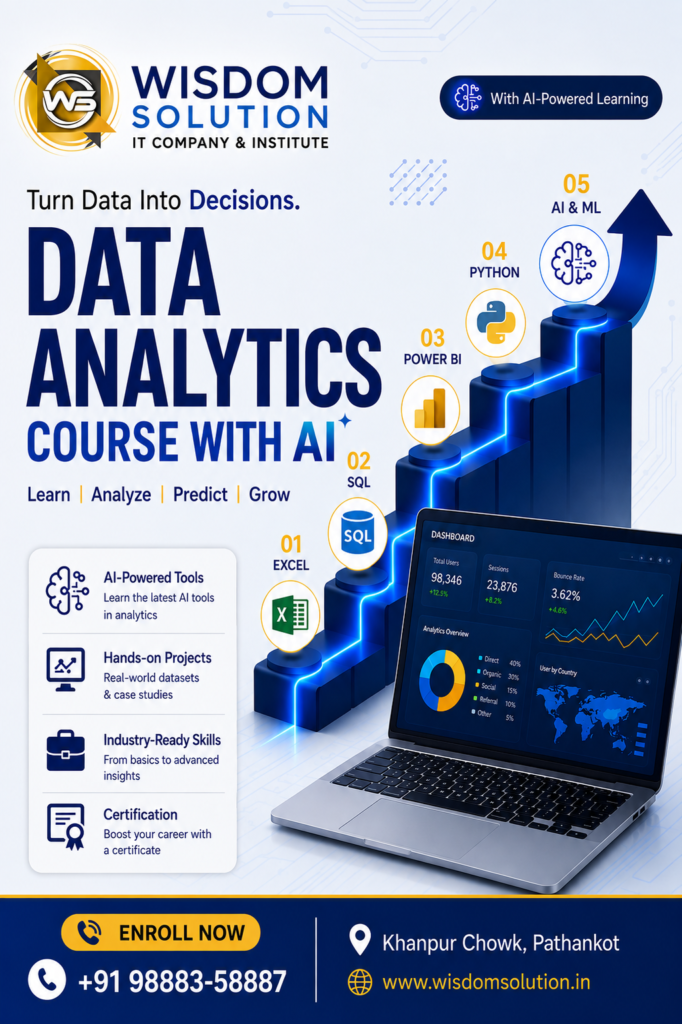
Excel is a useful starting point for anyone interested in data analytics. It helps users organise information, perform calculations and prepare reports. Students can learn formulas, sorting, filtering, PivotTables and charts. These features make it easier to work with data and understand basic business information.
2. SQL
SQL stands for Structured Query Language. It is used to retrieve and manage information stored in relational databases. By learning SQL, students can filter records, combine tables and summarise large datasets. In addition, these skills help them understand how businesses store and access information.
3. Python for Data Analysis
Python is a programming language widely used for data processing, analysis and automation. Beginners can gradually learn how to work with datasets and perform repetitive tasks more efficiently. Libraries such as Pandas can help users organise, transform and analyse information. However, students should first understand basic programming concepts before moving to more complex applications.
4. Power BI and Data Visualisation
Data visualisation helps people understand information through charts, graphs and dashboards. Microsoft Power BI is one tool used to create interactive reports.
5. Analytical and Communication Skills
Technical tools are important, but they are only one part of the job. A data analyst must also ask relevant questions, check the accuracy of results and explain findings clearly.
Benefits of Learning Data Analytics
Learning data analytics can help you understand how information is used to answer questions and solve practical problems. It teaches you to look beyond raw numbers and identify details that might otherwise go unnoticed.
For example, a business may have thousands of customer records but may not know which products attract the most interest. By examining the available information, an analyst can identify purchasing patterns and prepare a report that helps the business understand its customers.
How Wisdom Solution Institute Can Support Your Learning
Wisdom Solution Institute in Pathankot provides a local option for students exploring IT training and skill development. If you are interested in learning data analytics, discuss the available course curriculum with the institute before enrolling.
A career-focused learning plan should ideally cover the fundamentals of data handling, spreadsheet analysis, database queries, data visualisation and project-based practice.
Who Can Learn Data Analytics?
One of the best things about data analytics is that it connects technology with everyday problem-solving. People who enjoy working with numbers, understanding patterns or finding answers to practical questions may find this field interesting.
A student can begin by learning how information is organised in spreadsheets. Someone with a business background can explore how data helps companies understand sales and customer behaviour. Similarly, professionals can learn to interpret reports and use information to make their daily work more effective
Career Opportunities After Learning Data Analytics
After developing the required skills and practical experience, learners may explore entry-level opportunities related to data and reporting.
Possible job roles include:
- Junior Data Analyst
- Data Analyst
- Reporting Analyst
- Business Intelligence Analyst
- MIS Executive
- Data Quality Analyst
The responsibilities and eligibility requirements for these roles can vary by employer. Some positions may require a degree, while others may place greater emphasis on relevant experience and demonstrated technical skills.
How to Start Your Data Analyst Learning Journey
Step 1: Learn the basics. Understand data types, tables, formulas and basic statistics.
Step 2: Practise Excel. Organise sample information and prepare simple reports.
Step 3: Learn SQL. Practise retrieving, filtering and summarising database records.
Step 4: Explore Power BI. Create charts and dashboards that explain important findings.
Step 5: Learn Python. Build your programming knowledge and explore data analysis libraries.
Step 6: Complete projects. Work with sample sales, customer or student performance datasets and explain your findings.
Conclusion
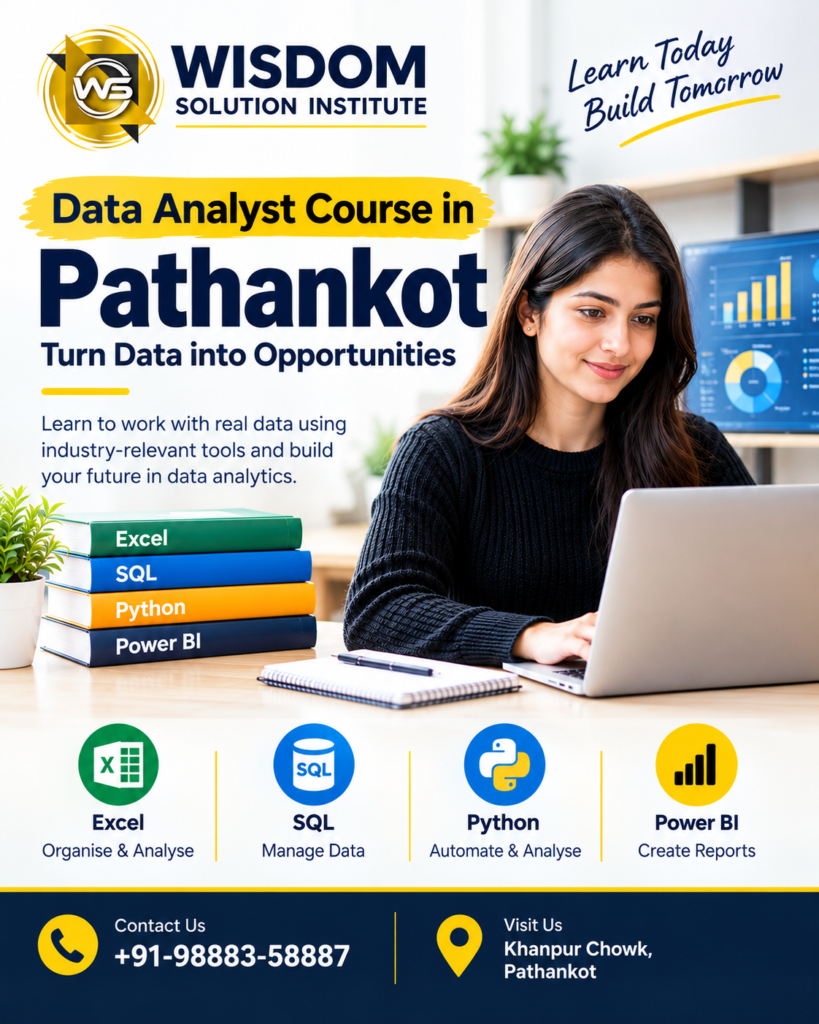
Data analytics combines technology, logical thinking and business understanding. It helps organisations transform information into insights that support better decisions. Therefore, learning tools such as Excel, SQL, Python and Power BI can be a valuable step for students interested in technology and analytical work.
If you are searching for a Data Analyst Course in Pathankot, Wisdom Solution Institute is an option to explore for your IT learning journey. Check the available syllabus, practical assignments and training details before choosing a programme.
Start with the fundamentals, practise consistently and build projects that demonstrate your abilities. With patience and continuous improvement, you can work towards your goal of developing a career in data analytics